


Sweating or Freezing? The "Spring Layering" Rule.
Share
The Spring Temperature Rollercoaster: Why Your Baby is Always Fussy
One minute the sun is shining, and the next, a brisk breeze sends you reaching for a blanket. For parents, spring is the most challenging season to dress for. You find yourself constantly checking your baby's neck—is it sweaty? Are their hands icy? This constant guessing game is more than just a nuisance; it affects your baby's sleep and skin health. The struggle of the 'spring transition' is real, and most parents are accidentally over-dressing or under-dressing their little ones because they haven't mastered the art of the layer.
The Hidden Danger: Why Cheap Synthetic Materials Hurt
When we see a cute polyester fleece or a cheap synthetic blend, we think 'cozy.' However, for a baby's sensitive skin during spring, these materials are a recipe for disaster. Synthetic fabrics are notorious for poor breathability. They trap heat and moisture against the skin, leading to the 'sweat-then-chill' cycle. When a baby sweats in polyester, the moisture stays trapped. As soon as you step into the shade or a breeze picks up, that moisture cools rapidly, making your baby feel freezing. This temperature volatility leads to heat rashes, eczema flare-ups, and a very grumpy infant who cannot communicate their discomfort. Relying on cheap, non-breathable materials doesn't just make them uncomfortable—it disrupts their body's natural thermal regulation.
The Organic Solution: The 'Spring Layering' Rule
The secret to navigating 50-degree mornings and 70-degree afternoons lies in high-quality organic cotton. Unlike synthetics, organic cotton is a 'living' fabric that allows air to circulate while providing essential insulation. To ensure your baby stays in the 'Goldilocks' zone of comfort, follow the 3-layer organic rule.
1. The Breathable Base Layer
Start with a GOTS-certified organic cotton bodysuit. This layer sits directly against the skin. Organic cotton is hypoallergenic and moisture-wicking, ensuring that if your baby does get a bit warm, the fabric absorbs the dampness and moves it away from the skin. Avoid any blends that include nylon or high percentages of elastane, as these reduce breathability.
2. The Insulating Middle Layer
The middle layer's job is to trap a thin pocket of air to provide warmth. A slightly heavier organic cotton knit sweater or a French Terry romper works perfectly. This layer should be easy to remove. If you are indoors or the sun comes out, this is the first layer to go. Because it is also cotton, it works in harmony with the base layer to keep airflow consistent.
3. The Protective Outer Layer
For the outer layer, think of a lightweight organic cotton quilted jacket or a breathable knit cardigan. This layer protects against the spring wind without creating an oven-like environment. The beauty of organic cotton layering is that you can peel these back one by one as the day warms up, ensuring your baby's core temperature remains stable without ever reaching the point of overheating.
How to Check Your Baby's Temperature
Forget the hands and feet—they are always cooler than the rest of the body. To truly know if your layering is working, place your hand on their chest or the back of their neck. If the skin feels warm and dry, you have nailed the Spring Layering Rule. If they feel damp or hot, remove the middle layer immediately. If they feel cool to the touch, add your outer organic knit.
Final Thoughts
Dressing your baby for spring shouldn't feel like a high-stakes gamble. By shifting away from synthetic fabrics and embracing the 3-layer organic cotton rule, you are protecting your baby's skin and ensuring they stay comfortable regardless of what the weather does. Better comfort means better naps, fewer rashes, and a much happier spring for everyone. Invest in quality basics that breathe, and you will never have to worry about the 'sweating or freezing' dilemma again.
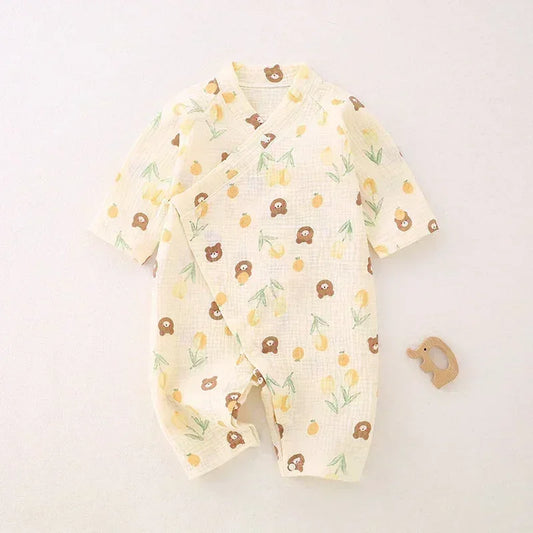
![[2-Pieces Set] 100% Cotton Long-Sleeve Kimono Romper - Blue & Blue Stripe](http://www.organiccottonclubs.com/cdn/shop/files/2_afd198b870f106588ecfc526d714b7a8.jpg?v=1764440625&width=533)


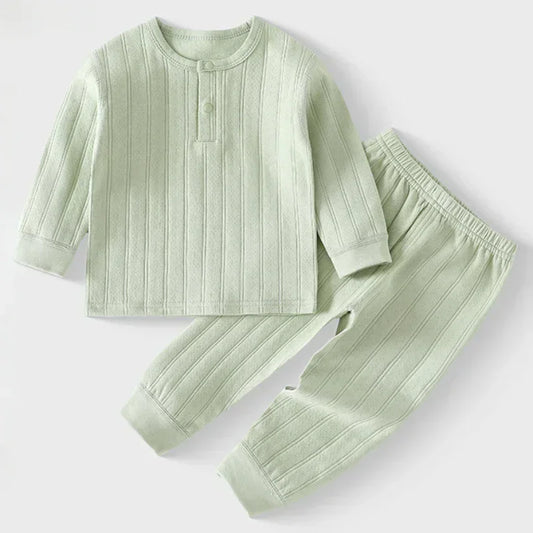
![[2-Pieces Set] 100% Cotton Long Sleeve Side-Snap Bodysuit - Pink & Pink Stripe](http://www.organiccottonclubs.com/cdn/shop/files/2_e34e329d03103a1ef2a830ed0f72d8f4.jpg?v=1759165907&width=533)
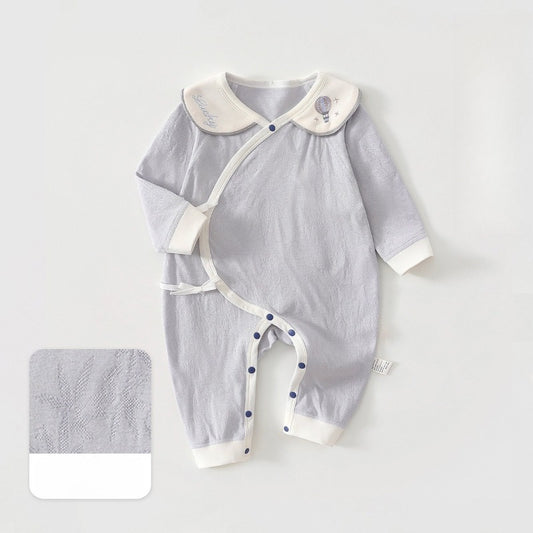
![[2-Pieces Set] 100% Cotton Long Sleeve Snapup Romper - Green & Green Stripe](http://www.organiccottonclubs.com/cdn/shop/files/4_dcde8d24f74c34bd214567f4011b27d7.jpg?v=1759166636&width=533)