


Why Your Baby Sleeps Better in Natural Fiber Pajamas
Share
The Midnight Struggle: Why Your Baby Is Not Sleeping Through the Night
Every parent knows the heavy-eyed exhaustion of the 3:00 AM wake-up call. You have checked the diaper, offered a feeding, and ensured the room is dark, yet your little one is still tossing, turning, and crying out in discomfort. This cycle of fragmented sleep is more than just a parenting rite of passage; it is often a sign that your baby's environment is working against their natural biology. While we obsess over crib safety and white noise machines, we often overlook the most critical factor that stays in direct contact with a baby's skin for twelve hours a day: their pajamas. Most mass-market baby sleepwear is designed for cost-efficiency rather than comfort, leaving parents to wonder why their children are so restless. The answer usually lies in the microscopic makeup of the fabric they are wearing.
The Agitation: Why Synthetic Fabrics Are Hurting Your Baby's Sleep
When you dress your baby in standard polyester or synthetic blend sleepers, you are essentially wrapping them in a thin layer of plastic. These materials are petroleum-based and lack the innate ability to breathe. This leads to a dangerous 'overheating cycle.' Because infants cannot regulate their body temperature as efficiently as adults, they rely on their clothing to help manage heat. Synthetics trap body heat, causing the baby's core temperature to spike. This leads to sweating, which then gets trapped against the skin because polyester is not moisture-wicking. As the sweat cools, the baby becomes clammy and chilled, causing them to wake up in distress. Furthermore, these synthetic fibers are often treated with harsh flame retardants and chemical finishes to meet industrial standards. For a newborn with a delicate skin barrier, these chemicals can trigger eczema flare-ups, contact dermatitis, and general itchiness that makes deep sleep impossible. You are not just fighting a sleep schedule; you are fighting the very fabric of their pajamas.
The Solution: The Science of Natural Fibers
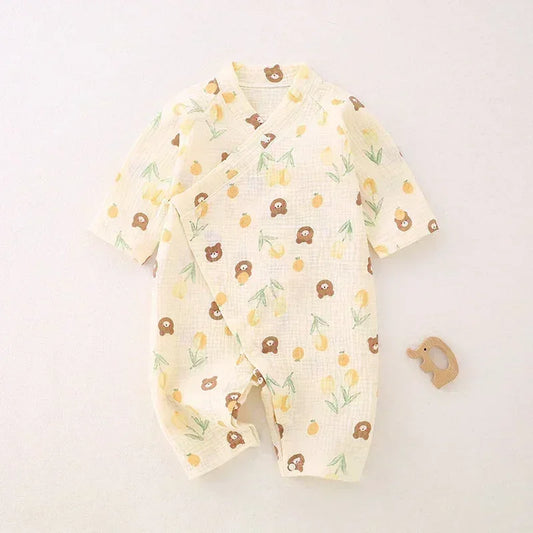
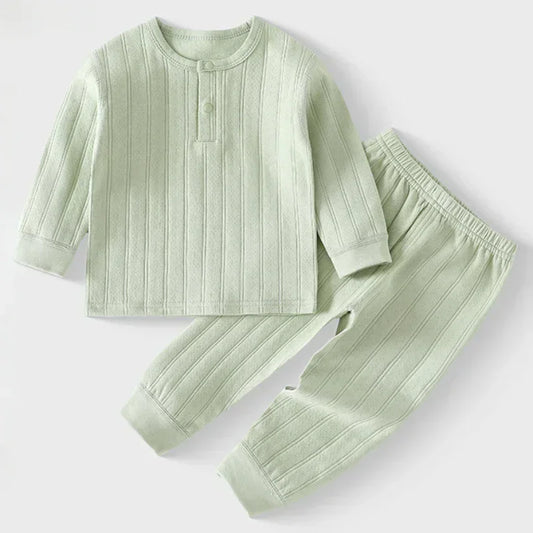
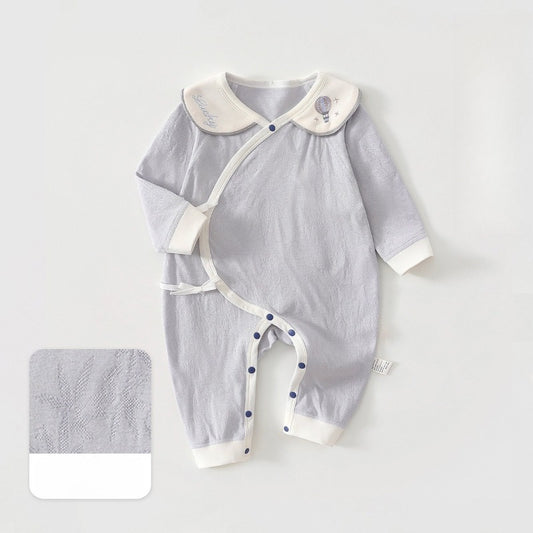
Switching to natural fibers like organic cotton, bamboo, and linen is the most effective way to optimize your baby's sleep hygiene. Natural fibers are inherently porous, allowing for superior air circulation that mimics a baby's natural cooling process. When a baby wears organic cotton, their skin can breathe, preventing the heat spikes that lead to midnight wake-ups.
- Thermoregulation: Organic cotton acts as a natural insulator, keeping babies warm in the winter and cool in the summer by facilitating a constant exchange of air.
- Moisture Management: Unlike plastic-based fabrics, natural fibers absorb moisture and pull it away from the skin, ensuring your baby stays dry even if they sweat slightly.
- Hypoallergenic Properties: Organic fibers are grown without the use of toxic pesticides or synthetic fertilizers. This means the final garment is free from the 'chemical cocktail' found in cheap alternatives, making it the only choice for babies with sensitive skin or allergies.
- Sensory Comfort: The physical texture of GOTS-certified organic cotton is significantly softer than processed synthetics. This reduces sensory irritation, helping a baby feel secure and 'cocooned' rather than restricted.
Why Quality Over Quantity Matters for the Modern Nursery
As a senior strategist in the baby industry, I always advise parents to invest in a few high-quality organic pieces rather than a dozen cheap synthetic ones. High-quality natural fibers are more durable and actually become softer with every wash, unlike polyester which pilling and becomes scratchy over time. When you choose organic, you are also making an ethical choice for the planet your child will inherit, reducing the microplastic shedding that occurs during every laundry cycle. Look for the GOTS (Global Organic Textile Standard) seal to ensure you are getting a product that is truly free from harmful substances. By prioritizing these materials, you are creating a 'sleep sanctuary' that supports your baby's physical health and your family's peace of mind.
Final Thoughts on Better Sleep
Better sleep for your baby is not always about the latest gadget or a complex sleep training method; sometimes, it is as simple as returning to nature. Natural fiber pajamas remove the physical barriers to rest—overheating, skin irritation, and chemical exposure. When your baby is physically comfortable, their nervous system can truly settle, leading to longer sleep cycles and happier mornings for everyone. Make the switch to organic cotton tonight and witness the transformation in your baby's rest. A well-rested baby is a thriving baby, and it all starts with the right fabric.
![[2-Pieces Set] 100% Cotton Long-Sleeve Kimono Romper - Blue & Blue Stripe](http://www.organiccottonclubs.com/cdn/shop/files/2_afd198b870f106588ecfc526d714b7a8.jpg?v=1764440625&width=533)


![[2-Pieces Set] 100% Cotton Long Sleeve Side-Snap Bodysuit - Pink & Pink Stripe](http://www.organiccottonclubs.com/cdn/shop/files/2_e34e329d03103a1ef2a830ed0f72d8f4.jpg?v=1759165907&width=533)
![[2-Pieces Set] 100% Cotton Long Sleeve Snapup Romper - Green & Green Stripe](http://www.organiccottonclubs.com/cdn/shop/files/4_dcde8d24f74c34bd214567f4011b27d7.jpg?v=1759166636&width=533)